7 Costly Masonry Estimating Mistakes (and How to Avoid Them)
A senior estimator's field guide to the seven errors that quietly bleed margin out of masonry bids — and exactly how to stop making them.

Every masonry estimator has lost a job they should have won — or, worse, won a job they should have lost. The difference between the two usually isn't talent or hustle. It's a handful of repeatable masonry estimating mistakes that creep into takeoffs when you're moving fast, juggling three bids, and the plans dropped at 4 p.m. on a Friday.
The good news: these errors are predictable, which means they're preventable. Below are the seven that cost the most money, why they happen, and the practical habits that keep them out of your numbers. None of this requires being smarter than the next estimator — just more disciplined about the spots where bids quietly bleed margin.
1. Forgetting to deduct openings (or deducting them wrong)
This is the classic, and it cuts both ways. Forget to subtract doors, windows, and large penetrations and you'll overstate your block and brick counts, pad your price, and lose the bid to someone who did the math. Over-deduct — or net out openings you should have only partially deducted — and you'll come in light and eat the difference on the back end.
The nuance most estimators miss: small openings often aren't worth deducting at all. A wall full of half-block-sized penetrations can actually take more labor and material because of the cutting and waste around each one, not less. Many estimators set a deduction threshold — anything under a certain square footage stays in the gross count.
The fix is a consistent rule you apply on every job. Deduct openings above your threshold, leave the small ones in, and always note jambs, sills, and lintels as their own line items rather than assuming they wash out. If you want a refresher on sequencing the whole count, our walkthrough on how to do a masonry takeoff covers where openings fit in the order of operations.
2. Missing rebar, grout, and joint reinforcement
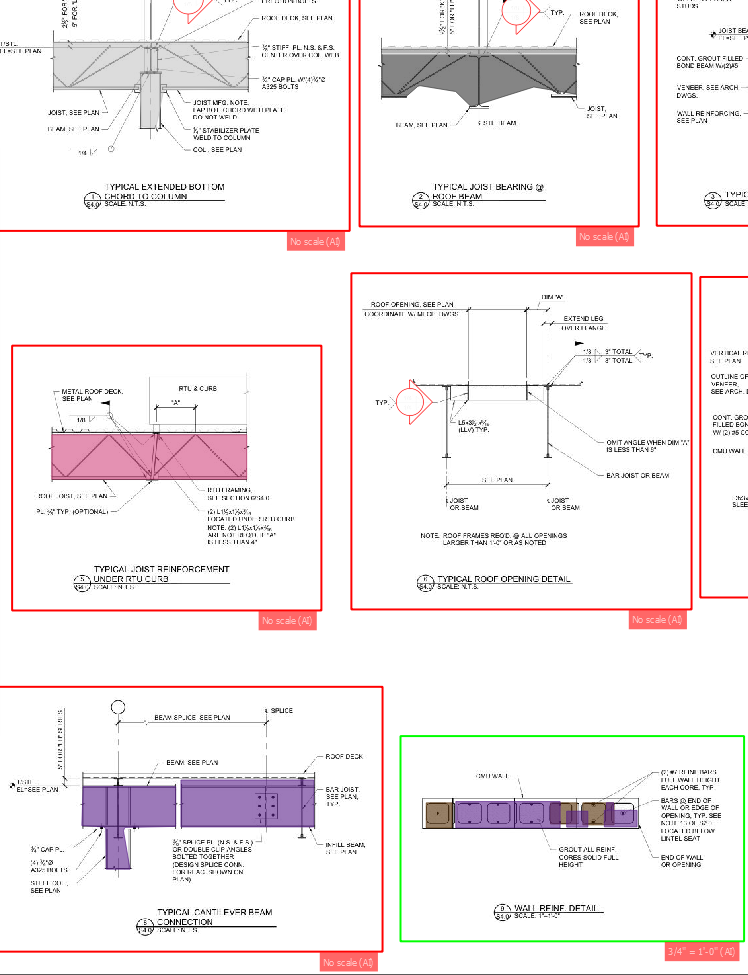
The wall is the easy part. What gets forgotten is everything inside the wall. Vertical rebar in grouted cells, horizontal bond beam steel, dowels at the footing, and ladder or truss-type joint reinforcement every few courses — these live in the structural notes and the masonry vertical reinforcement schedule, not on the elevation you've been staring at.
Grout is its own trap. You have to know which cells are solid-grouted, whether it's full or partial grouting, and what that does to your grout volume and your labor. A partially grouted CMU wall and a fully grouted one can look identical in plan and price wildly differently. Skip the schedule and you've left grout, steel, and the labor to place both out of your number entirely.
The wall is the part everyone counts. The money you lose is hiding in the cells, the schedule, and the structural notes nobody opened.
The habit that saves you: never price a reinforced wall without opening the reinforcement schedule and the structural general notes first. Build a standing checklist — verticals, horizontals, dowels, joint reinforcement, grout type — and tick every line before the wall is "done."
3. Using a one-size-fits-all waste factor
A flat 5% on everything feels safe. It isn't. Waste varies enormously by material, pattern, and the geometry of the job. Standard running-bond CMU on a clean rectangular building wastes very little. A brick veneer with lots of corners, a soldier course, intricate banding, or a stacked-bond pattern wastes far more because of cutting and breakage. Cut stone and specialty units waste more still.
Applying the same factor across the board means you're simultaneously over-buying on the simple stuff and under-buying on the complex stuff. The fix is to keep material- and pattern-specific waste factors and apply them deliberately. Bump the factor on jobs heavy with corners, openings, and detail work, and document why — your future self and your PM will thank you when the reconciliation comes.
4. Ignoring bulk packaging and rounding
Material doesn't ship by the exact unit. Brick comes in cubes and straps, block ships by the cube, mortar by the bag, grout by the cubic yard from the truck. If your takeoff says you need 9,400 brick and a cube is 500, you're ordering 19 cubes — 9,500 brick — not 9,400. That rounding happens on every material, and across a large job it adds up to real dollars you either forgot to bill or have sitting in the yard.
Two things go wrong here. First, estimators price the raw count instead of the purchasable quantity, so the bid is light by the rounding. Second, they forget that partial cubes still cost a full cube and still need to be handled, stored, and protected. Always round up to the next full package unit per material, and price what you'll actually buy — not the theoretical count.
5. Mis-scaling the drawings
Nothing torpedoes a takeoff faster than a wrong scale. It usually happens one of two ways: the PDF was printed or exported "to fit" so the stated scale no longer matches, or you trusted the title-block scale without verifying it against a known dimension. Either way, every linear and area measurement you pull is off by the same multiplier — and you won't notice until the numbers feel weird.
The fix takes thirty seconds. Before measuring anything, calibrate against a dimension you can read directly off the plan — a door width, a grid spacing, a labeled wall length. If your measured value doesn't match the printed dimension, your scale is wrong and everything downstream is too. Re-calibrate, then proceed. For more on pulling reliable dimensions off a set, see our guide to reading masonry blueprints.
6. Pricing from stale assemblies
Assemblies are a huge time-saver — until they quietly go out of date. If your "8-inch CMU wall" assembly still carries last year's block price, an old mortar cost, or a labor rate from before your crews got a raise, every wall you drop it on inherits the error. Multiply one stale unit cost across thousands of square feet and the gap is no longer rounding noise.
It's not just price, either. Productivity rates drift, fuel and equipment costs move, and unit weights matter when you're costing handling and lift equipment. Review your assemblies on a schedule — quarterly at minimum, and immediately after any material price swing or labor change. An assembly library is only an asset if someone owns keeping it current.
7. Not updating the bid when plans change
Addenda are where good bids go to die. A revised opening schedule, a changed wall height, a swap from partial to full grout, an added control joint — any of these can move your number, and they often arrive after you've "finished." Estimators who treat the first plan set as final get blindsided when the addendum they skimmed turns out to have re-drawn half the masonry.
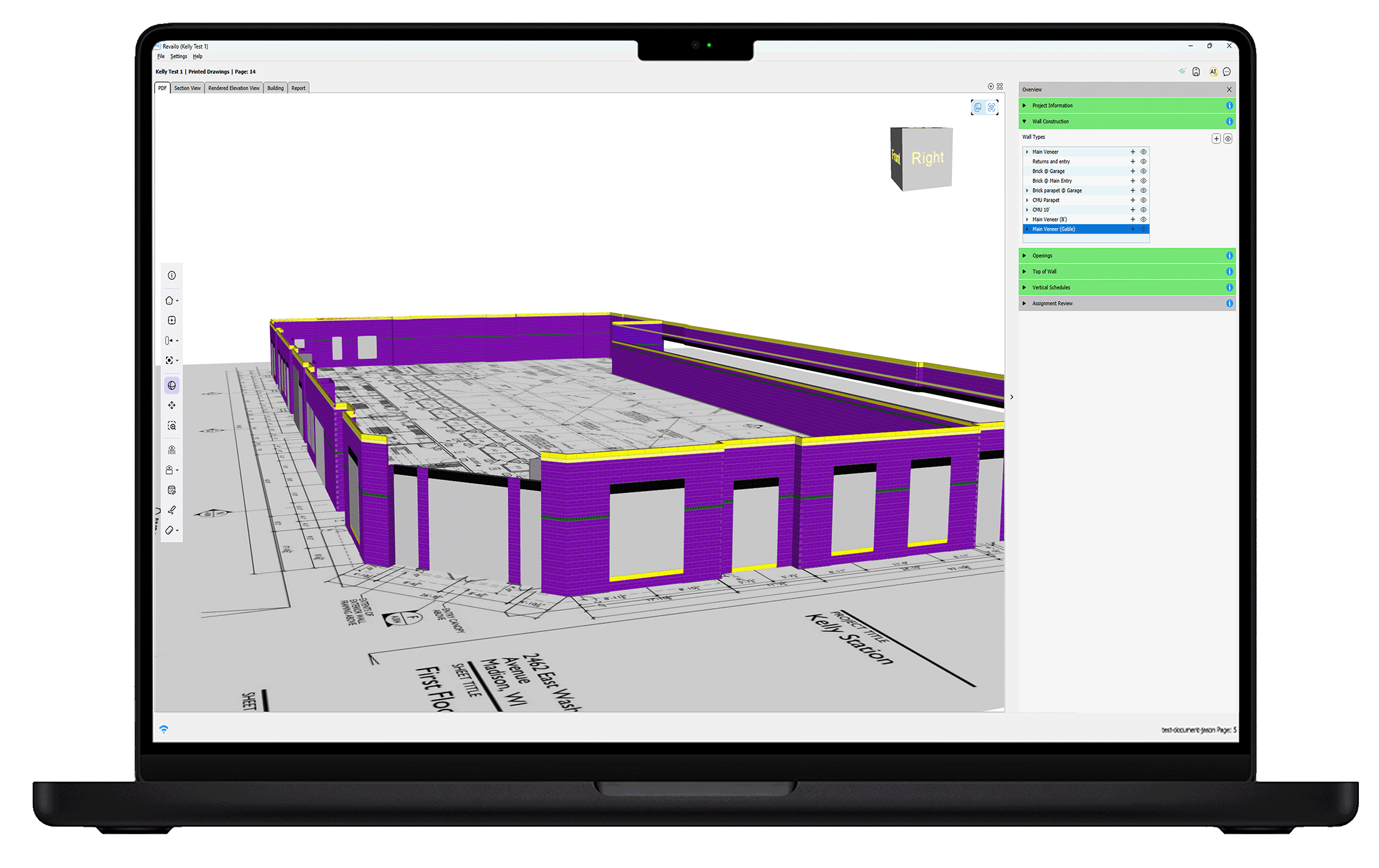
Treat every addendum as a re-takeoff of the affected scope, not a footnote. Log which revision your bid is based on, compare new sheets against the version you priced, and re-run the changed quantities. This is exactly where automation earns its keep: tools like Revailo re-run the takeoff against an updated set in a fraction of the time, so a plan change becomes a quick diff instead of a late-night redo. If you want the broader picture on where AI fits, our overview of AI masonry estimation digs into it.
How to build these fixes into a repeatable process
Notice the through-line: almost every mistake above is a discipline problem, not a knowledge problem. You already know openings need deducting and grout needs counting. The errors happen when there's no checklist forcing you to look. So build the checklist. Standardize your opening threshold, your waste factors by material, your packaging round-ups, your calibration step, and your assembly-review cadence — then run every job through the same gates.
A consistent process also makes you faster, because you stop re-deciding the same things on every bid. And when you do lose one, a documented takeoff lets you go back and find out exactly where your number diverged, instead of guessing.
Key takeaways
- Set a fixed opening-deduction threshold and price jambs, sills, and lintels as their own lines.
- Never price a reinforced wall without opening the reinforcement schedule and structural notes — count rebar, joint reinforcement, and grout type.
- Use material- and pattern-specific waste factors instead of one flat percentage.
- Round every material up to its real purchasable unit (cubes, straps, bags, cubic yards).
- Calibrate drawing scale against a known dimension before measuring anything.
- Review assemblies on a schedule so stale unit costs don't multiply across the job.
- Re-take off the affected scope on every addendum and log the revision your bid is based on.
None of these fixes are glamorous, and that's the point. Winning bids and protecting margin in masonry comes down to catching the boring stuff every single time — the opening you almost forgot, the grout cell hiding in the schedule, the addendum that moved a wall. Tighten the seven habits above and you'll spend less time chasing reconciliation surprises and more time pricing the next job with confidence.
Revailo pairs deep-learning takeoffs with 3D visualization so you can bid faster and quote with confidence. Book a live demo and see it on your own plans.